


Key Takeaways
- AI and machine learning automate design and maximize material efficiency in engineering.
- 3D concrete printing dramatically reduces construction timelines and material waste.
- Digital twin technology enhances ongoing monitoring and predictive maintenance.
- Advanced building materials offer improved durability and sustainability.
- Parametric design tools create optimal, customized building solutions tailored to diverse needs.
Structural engineering is rapidly evolving with the emergence of new technologies and materials that are improving how we design, build, and maintain buildings. Today’s advanced methods not only make construction safer and more efficient but also open up new possibilities for sustainability and resilience. Whether working on a residential home or a large commercial space, modern advancements are redefining what it means to be a structural engineer. If you’re seeking expertise for your next project, a local structural engineer brings cutting-edge knowledge and practical experience to ensure safety, efficiency, and innovation in every build.
With greater integration of digital tools and automation, industry professionals can respond more quickly to complex demands, meet tighter deadlines, and minimize environmental impact. Structural engineers today rely on breakthroughs such as artificial intelligence, 3D printing, digital twin simulations, and high-tech materials to transform old limitations into innovative solutions. These innovations offer robust options for both traditional projects and innovative architectural designs, enabling stronger, longer-lasting structures across diverse environments.
AI and Machine Learning Integration
The introduction of artificial intelligence (AI) and machine learning (ML) has fundamentally changed the landscape of structural engineering. By automating time-intensive calculations and optimizing layouts, AI helps engineers quickly identify the most efficient structural systems and materials for any given design. These technologies can analyze vast datasets to predict potential stress points and prevent structural failures—leading to safer, longer-lasting buildings. Automated design software powered by AI is revolutionizing workflows, enabling the rapid testing of design alternatives and the refinement of solutions in real-time. Similarly, HOA erosion control measures can benefit from predictive modeling, helping associations plan landscaping, drainage, and grading strategies that minimize soil loss and property damage. According to Forbes, incorporating AI helps identify risks before construction even begins, ensuring streamlined project delivery and reduced costs throughout the lifecycle.
3D Concrete Printing
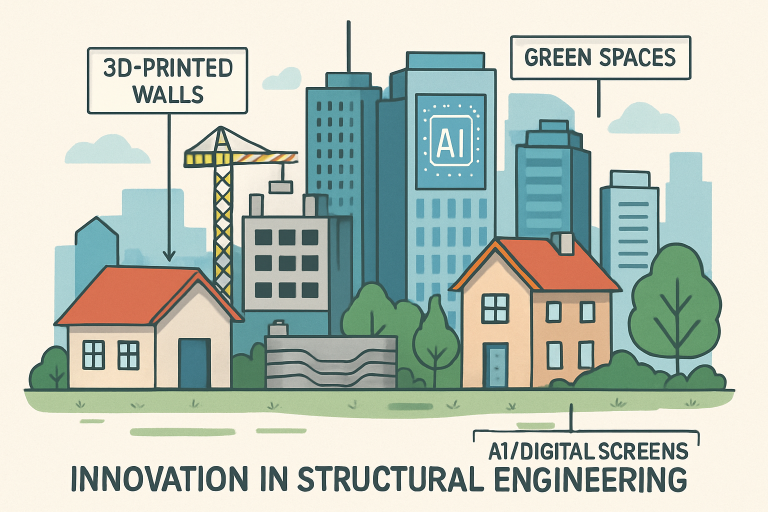
3D concrete printing, also known as additive manufacturing, is making significant waves in residential and commercial construction. By layering specialized concrete mixtures, builders can create foundation slabs, walls, and even intricate architectural features directly from digital designs. This method significantly reduces material waste and drastically cuts construction timelines, thereby lowering labor and equipment needs. The completion of La Tour, one of the world’s tallest 3D-printed buildings, demonstrated not only the technical feasibility but also the aesthetic versatility that 3D printing offers. As this technology matures, it promises more affordable, customizable building solutions, especially for urgent housing and public infrastructure needs.
Digital Twin Technology
Digital twins are detailed, dynamic virtual models that accurately mirror the physical reality of buildings in real-time. With sensors embedded throughout a structure, data is relayed to a central model that engineers can analyze remotely. This continuous feedback loop enables predictive maintenance—identifying deterioration or anomalies before they escalate into costly repairs. Commercial property managers utilize digital twins to oversee multiple assets efficiently, ensuring optimal performance across their buildings. According to Building Design + Construction, this technology is especially valuable for managing complex facilities, from high-rises to sprawling campuses, ensuring safety, compliance, and lower operational costs.
Advanced Materials and Manufacturing
The rise of advanced construction materials—like fiber-reinforced concrete, nano-engineered composites, and self-healing bio-concrete—is enabling stronger, lighter, and more resilient structures. These innovations deliver higher performance in harsh climates, withstand increased loading, and extend a building’s lifespan—key concerns in both residential and commercial sectors. In addition to their structural benefits, many of these materials contribute to sustainable building practices by incorporating recycled content or minimizing their environmental footprint during production. For example, self-healing concrete utilizes embedded microcapsules or reactive bacteria to repair cracks autonomously, thereby reducing long-term maintenance and conserving resources.
Parametric Design
Parametric design leverages powerful design algorithms to generate and iterate on countless structural scenarios. By adjusting input parameters such as load requirements, site constraints, or aesthetic preferences, engineers and architects can rapidly evaluate options for optimal strength, visual appeal, and cost-effectiveness. This approach leads to smarter, more adaptable buildings tailored to specific environments and client needs. Parametric tools foster creativity and problem-solving, allowing challenges to become opportunities for innovation. As digital workflows become industry standard, parametric design is set to drive the next generation of iconic, sustainable architecture.
Final Thoughts
As the demands on residential and commercial buildings intensify, embracing these breakthroughs is more important than ever. Modern solutions—ranging from high-tech simulations to eco-friendly materials—are helping engineers and builders deliver safer, smarter, and longer-lasting structures across every sector. The future of structural engineering is dynamic, and those harnessing these new technologies are poised to shape the skylines of tomorrow.
 lexutor